150 $
Description
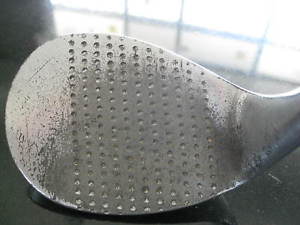
RARE VINTAGE ALL ORIGINAL GENE SARAZEN 1930'S WILSON R-20 SAND WEDGE CLASSIC PUNCHED FACE. RIGHT HANDED. BROWN PYRATONE SHAFT. LEATHER WRAPPED GRIP WITH MATCHING END CAP. NO DEFECTS, NO DAMAGE. RARE.Description:You don't find these very often! Vintage RH Wilson R-20 Sand Iron-Brown Pyratone Shaft. Designed by Gene Sarazen. Ben Hogan played with a wedge similar to this early in his career and he would say the ball came out so easily out of the bunker that it was like cheating. Lee Trevino treasured one of these as well. (Two of the greatest wedge players to ever play the game.) Very Nice Vintage '30s Wilson R-20 Sand Iron. Brown Pyratone Shaft. This is a vintage Wilson R-20 Sand Iron, circa 1930s, in very good all original condition. Wedge has a great punched dot face (highly sought after as Gene Sarazen's first design was with punched dots. People love the dots as the ball gets more action on the greens) and a brown sheathed shaft in excellent condition with no separation at the hosel. Grip is a vintage black leather wrap with a matched black and brown end cap. Sole shows typical vintage sand wear. Very legible R-20 on sole (meaning little use. In many R-20's the R-20 is stretched. Not here.). Wilson Sand Iron stamped on back. Club is very solid with a tight, secure head. 35 1/2" in length. Wedge is ready for immediate play or display; a hard to find 1930s collectible! Vintage Wilson Sand Iron! Wrapped in paper, bubble wrap and boxed. Gene SarazenSarazen invented the modern sand wedge, and debuted the club (while keeping it secret during preliminary practice rounds) at The Open Championship at Prince's Golf Club in 1932 (which he won). He called it the sand iron, and his original club is no longer on display at Prince's as it is worth too much for the insurers to cover.Sarazen had previously struggled with his sand play and there had been earlier sand-specific clubs. But Bobby Jones's sand club, for example, had a concave face, which actually contacted the ball twice during a swing; this design was later banned. Sarazen's innovation was to weld solder onto the lower back of the club, building up the flange so that it sat lower than the leading edge when soled. The flange, not the leading edge, would contact the sand first, and explode sand as the shot was played. The additional weight provided punch to power through the thick sand. Sarazen's newly developed technique with the new club was to contact the sand a couple of inches behind the ball, not actually contacting the ball at all on most sand shots.Every top-class golfer since has utilized this wedge design and technique, and the same club design and method are also used by amateur players around the world. The sand wedge also began to be used by top players for shots from grass, shortly after Sarazen introduced it, and this led to a revolution in short-game techniques, along with lower scoring by players who mastered the skills.
| Club Type: | Sand Wedge | Gender: | Men |
| Brand: | Wilson | Dexterity: | Right-Handed |
| Shaft Material: | Steel | Country/Region of Manufacture: | United States |
| UPC: | Does not apply |
RARE VINTAGE ALL ORIGINAL GENE SARAZEN 1930'S WILSON R-20 SAND WEDGE CLASSIC PUNCHED FACE. RIGHT HANDED. BROWN PYRATONE SHAFT. LEATHER WRAPPED GRIP WITH MATCHING END CAP. NO DEFECTS, NO DAMAGE. RARE.Description:You don't find these very often! Vintage RH Wilson R-20 Sand Iron-Brown Pyratone Shaft. Designed by Gene Sarazen. Ben Hogan played with a wedge similar to this early in his career and he would say the ball came out so easily out of the bunker that it was like cheating. Lee Trevino treasured one of these as well. (Two of the greatest wedge players to ever play the game.) Very Nice Vintage '30s Wilson R-20 Sand Iron. Brown Pyratone Shaft. This is a vintage Wilson R-20 Sand Iron, circa 1930s, in very good all original condition. Wedge has a great punched dot face (highly sought after as Gene Sarazen's first design was with punched dots. People love the dots as the ball gets more action on the greens) and a brown sheathed shaft in excellent condition with no separation at the hosel. Grip is a vintage black leather wrap with a matched black and brown end cap. Sole shows typical vintage sand wear. Very legible R-20 on sole (meaning little use. In many R-20's the R-20 is stretched. Not here.). Wilson Sand Iron stamped on back. Club is very solid with a tight, secure head. 35 1/2" in length. Wedge is ready for immediate play or display; a hard to find 1930s collectible! Vintage Wilson Sand Iron! Wrapped in paper, bubble wrap and boxed. Gene SarazenSarazen invented the modern sand wedge, and debuted the club (while keeping it secret during preliminary practice rounds) at The Open Championship at Prince's Golf Club in 1932 (which he won). He called it the sand iron, and his original club is no longer on display at Prince's as it is worth too much for the insurers to cover.Sarazen had previously struggled with his sand play and there had been earlier sand-specific clubs. But Bobby Jones's sand club, for example, had a concave face, which actually contacted the ball twice during a swing; this design was later banned. Sarazen's innovation was to weld solder onto the lower back of the club, building up the flange so that it sat lower than the leading edge when soled. The flange, not the leading edge, would contact the sand first, and explode sand as the shot was played. The additional weight provided punch to power through the thick sand. Sarazen's newly developed technique with the new club was to contact the sand a couple of inches behind the ball, not actually contacting the ball at all on most sand shots.Every top-class golfer since has utilized this wedge design and technique, and the same club design and method are also used by amateur players around the world. The sand wedge also began to be used by top players for shots from grass, shortly after Sarazen introduced it, and this led to a revolution in short-game techniques, along with lower scoring by players who mastered the skills.
We Ship Fast! U.S. shipping (lower 48 only) is $15. We ship worldwide - contact me for shipping estimates outside of U.S. United States Postal Service. Buyer pays for shipping. Returns accepted. Thanks for looking! Attention: Import duties, taxes and charges are not included in the item price or shipping charges. These charges are the buyer's responsibility. Please check with your country's customs office to determine what these additional costs will be prior to bidding/buying.