135 $
Description
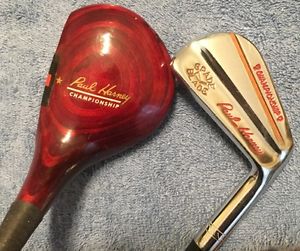
Kroydon Paul Harney Classic Vintage Golf Set plus Bullseye Putter- Must See! You are bidding on a complete right handed golf club set from the early 1960’s. Set consists of: Kroyden Paul Harney Spade Blade model irons 2 through 9 irons serial number 03630. Irons heads are made of forged carbon steel and are chrome plated. Length is based on a 37 ½” 5 iron (standard for era). Kroyden Paul Harney Championship model laminated maple woods – Driver (43 ½”), 2 wood (42 ¾”, 3 wood (42 ¼”) and 4 wood (41 ¾”). Club set features Kroydon Pro-Power steel shafts (no flex indicated) and original red/black leather grips. These clubs are comparable in quality to other makers of the era including: Wilson Staff, Spalding Elite, MacGregor Tourney, Ben Hogan, Walter Hagen and Tommy Armour. Acushnet Bullseye brass putter designed by John Reuter Jr. Model STDF5P, features original fluted steel shaft and a new Grip-One oversize round style grip. Club measures 35” long. Overall condition is good – some bag rattle marks on head, will not affect playability. Condition of wood and irons is excellent – set does not appear to have been played much. Minor issues include: shaft bands are missing from 4,5 and 6 iron, original leather grips, though not worn, are slick from age (should be reconditioned or replaced if set is played).Driver has some minor finish loss on sole, whipping wraps on woods are original and intact, but look a little dingy from age. Inspect pictures carefully and ask any and all questions before bidding. Actual shipping charges apply. Forged iron mystique: For years forged blade irons were the tour player’s mainstay – and they still enjoy a loyal following among PGA Tour players. Shots hit on the sweet spot were almost not felt – the ball flew far and true. Conversely, anything off the sweet spot was immediately felt and distance/direction suffered. In addition, the ball could be worked easily and predictably (high-low-fade-draw) if different areas of the club face were targeted. Forged irons are made by pounding carbon steel until the atoms are literally squashed together, creating a very tight grain structure (no dead or hot spots) – which in turn transmit vibrations more accurately to the golfer. Cast irons became popular because of less cost and because “forgiving” or “game improvement” designs could be cheaply implemented – and they do work. Balls hit off the sweet spot travel considerably farther and straighter than their forged counterparts, but at a price. The sweet spot on a forgiving design never feels as good as the forged one and a player’s swing can get pretty out of whack, while still hitting decent shots. Persimmon woods versus laminated maple woods: Some purists insist that persimmon is the best material for a wood head, but in fact laminated maple is far superior. They were more durable, more weight consistent, less expensive to produce and could be stained and finished just as attractively. Fun Forged Facts: Pro golfer Bob Tway, has stated that forgiving, cavity back irons drove him off the PGA tour – allowing his swing to get so far off, he never realized it until it was too late! Rickie Fowler routinely practices with old forged blades to keep him swing on track. Classic club scrambles and tournaments are becoming very popular at many clubs and public courses - join the rage with these timeless classics!